Batumi Districts: Where to Buy and What a Square Meter Costs
A district-by-district guide to buying new-build in Batumi, with price per square metre and which areas suit income, living or residency.
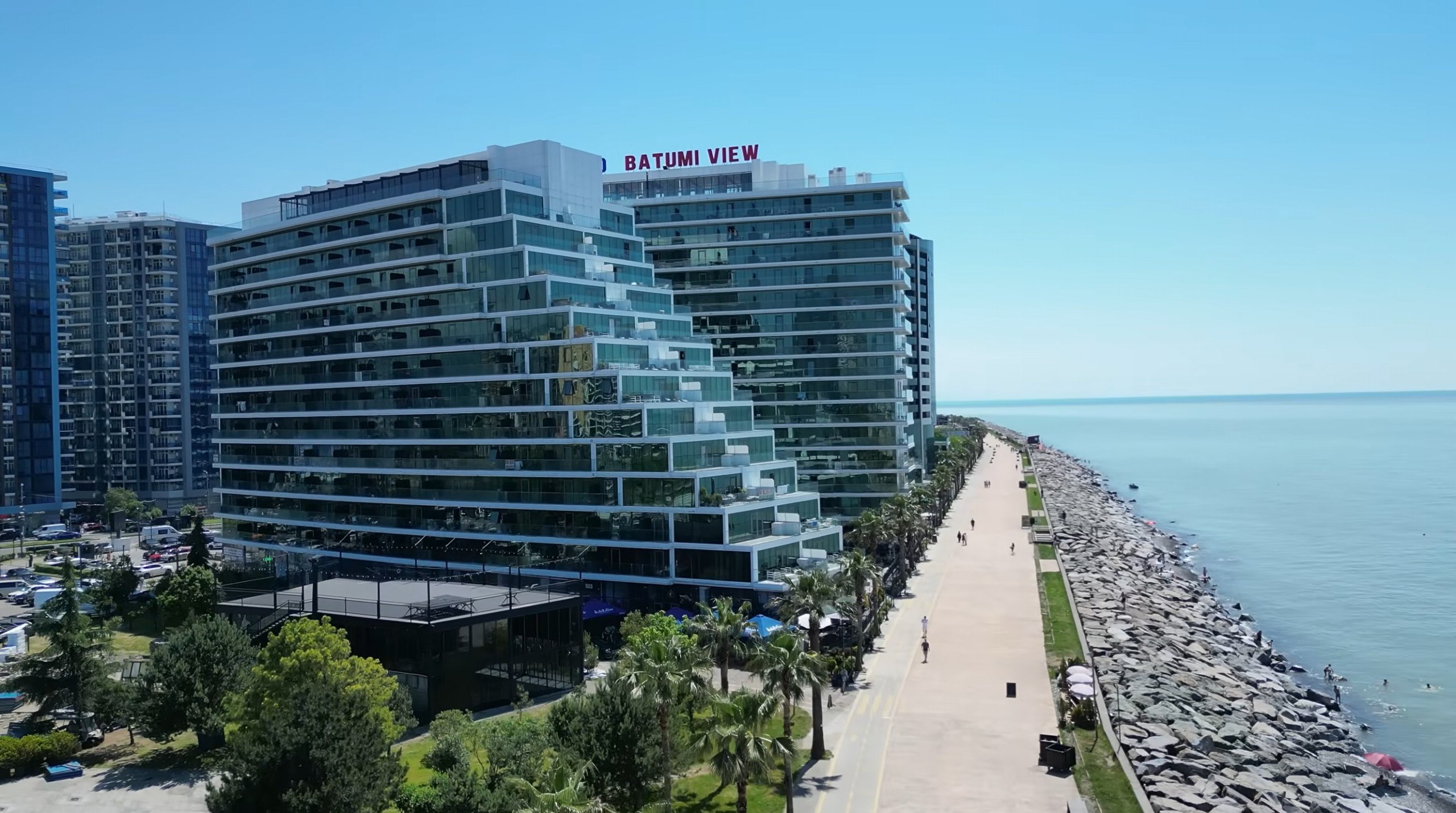
Choosing the right district in Batumi decides almost everything: your future yield, your comfort if you live there, even your route to a residence permit. The city is compact, yet the price per square meter varies by nearly two to one between districts, and each area has its own character. This guide breaks down Batumi districts with real price-per-square-meter figures and a clear rationale for where to buy new-build for income, quiet living, or residency. Each price includes its source and period, so you can verify it yourself.
One point on method first: the figures below are the price per square meter for turnkey new-build, not the cost of a finished unit. Your final budget depends on floor area, floor level, view, and construction stage, which is exactly why a small studio and a spacious apartment in the same building are different sums at the same price per meter.
How to choose a district based on your goal
Before you look at prices, answer one question honestly: why are you buying? That decides which district is right for you, and the entry price comes second.
For income, what matters most is occupancy and seasonality, which means proximity to the sea, the promenade, and the places tourists gather. According to TBC Capital, around 66% of buyers in Batumi acquire an apartment specifically for rental cash flow, and the city's rental market is driven by international tourism. So for short-term letting, the first line and seaside locations make sense, because a unit there is easier to fill.
For quiet living, for yourself or your family, the inner districts often win instead: calmer, cheaper per meter, less tourist bustle under your windows, yet the whole city stays a short drive away.
For residency, the district barely matters. The threshold is US$150,000 based on the market valuation determined by an accredited appraiser, and it is not tied to location (the threshold applies from 1 March 2026 and should be confirmed at the time of the deal). What counts is the value and valuation of the property, not the prestige of the address. We cover the procedure in full in our article on the Georgia residence permit through property.
A map of Batumi districts with prices per square meter
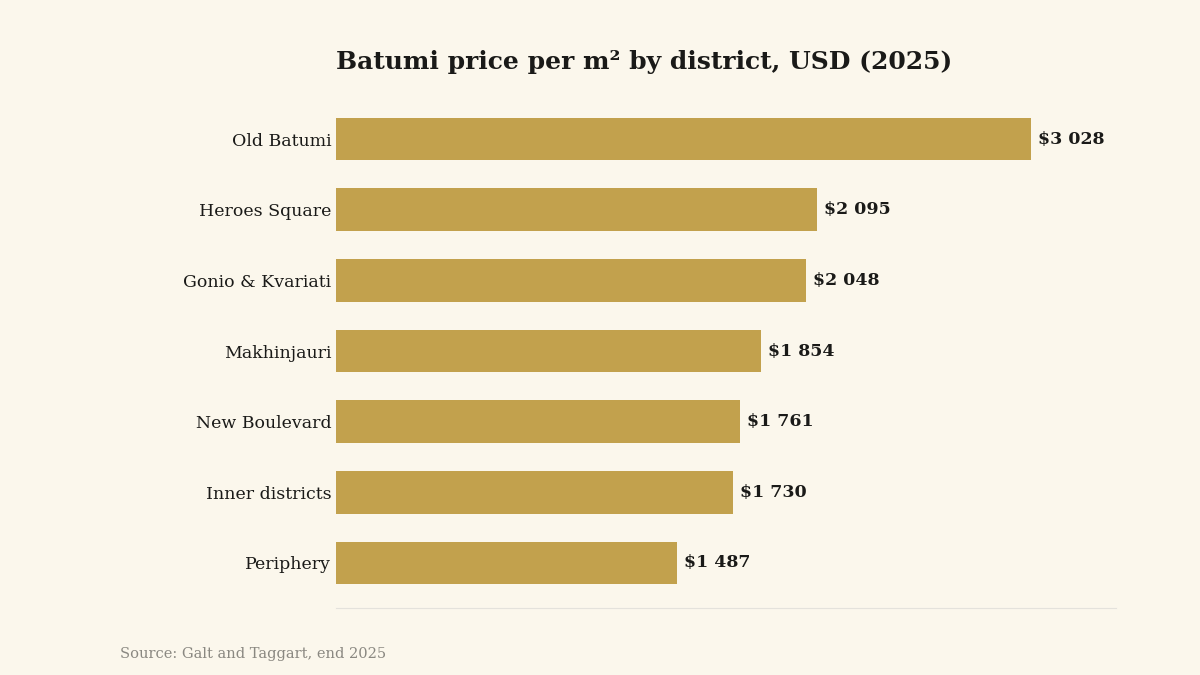
Below are the average turnkey new-build prices per square meter by district at the end of 2025, per Galt and Taggart. The gap between the most expensive and the most affordable district is more than two to one, and that is the main lever on your budget.
Source for the full series: Galt and Taggart, by Batumi district, end of 2025.
Old Batumi is the historic center and the most expensive address in the city, about US$3,028 per sqm: compact development by the sea, a walkable setting, status. Heroes Alley and the seaside strip around it sit at about US$2,095 per sqm, a premium resort location. Gonio and Kvariati, south of the city, are about US$2,048 per sqm: coastal resort settlements where new construction is shifting as buildable land in Batumi itself runs short, a point Galt and Taggart make directly. Makhinjauri to the north is about US$1,854 per sqm. New Boulevard, at about US$1,761 per sqm, is the most active district in terms of sales and the core of modern tower development. The inner districts, priced at about US$1,730 per sqm, are residential areas of Batumi located away from the first line. The periphery, at about US$1,487 per sqm, is the most affordable entry point to the city.
First line versus inner districts: what you pay extra for
The biggest budget fork in Batumi is less about the district than about the distance to the sea. The first line and seaside locations cost more per meter, and the premium is not for prestige in itself but for the view and the occupancy. An apartment with a sea view, three minutes from the beach, finds a tenant faster and commands more, especially in season.
The inner districts, at about US$1,730 per sqm, offer the same urban infrastructure for less, but without a sea view and with lower tourist demand. For living, that is often a sensible and underrated choice: you buy more space for the same money. For short-term letting, an inner address is harder because it is precisely the view and proximity to the water that sell a night to a tourist.
The conclusion is simple and honest: paying up for the first line is justified if your goal is short-term income. If your goal is living, or maximum floor area on a budget, an inner district gives you more for less.
Where short-term income sits, and where quiet living sits
Here you have to be sober, because yield depends not only on the district but on how you let the property. A seaside location alone does not guarantee a return.
Short-term rental income concentrates on the first line and seaside locations: New Boulevard, Heroes Alley, the seafront strip, and the resort areas of Gonio and Kvariati. But Batumi's short-term market is sharply seasonal: occupancy peaks in July and August, and the average daily rate across the city sits at about US$35.6, per Galt and Taggart for 2025. By their own calculation, self-managed short-term letting yields around 3% net after costs, and their wording is blunt: without professional management, the return can fall to zero or go negative. Gross yield across Batumi as a whole fell from 8.8% in 2024 to about 7.4% in 2025 (Galt and Taggart).
What this means in practice. The high "up to 12%" yield the market talks about does not belong to any studio by the sea, but to a branded, operator-managed aparthotel: year-round occupancy, pooled income among owners, and the on-site amenities that keep guests through the off-season. That is less about the district than about the format of the property. We give a full yield calculation with a worked example in our piece on rental income in Batumi.
Quiet living means the inner districts and parts of the seaside settlements outside the peak tourist season. Here you gain on price per meter and on calm, and any income, if you need it at all, is better built on long-term letting to locals than on the seasonal flow.
Where the supply overhang concentrates, and why it matters
This is the honest part that developer sites skirt, and you need it before you sign. There genuinely is a lot of seaside supply in Batumi. Unsold stock at the end of 2025 rose by about 14% year on year to around 12,400 apartments, while projects scheduled for 2025-2029 hold roughly 58,000 units, about 80% of which are aimed at short-term rental (Galt and Taggart). For 2026, Galt and Taggart forecast new-build price growth slowing to 4-6% and call it a year of consolidation rather than expansion.
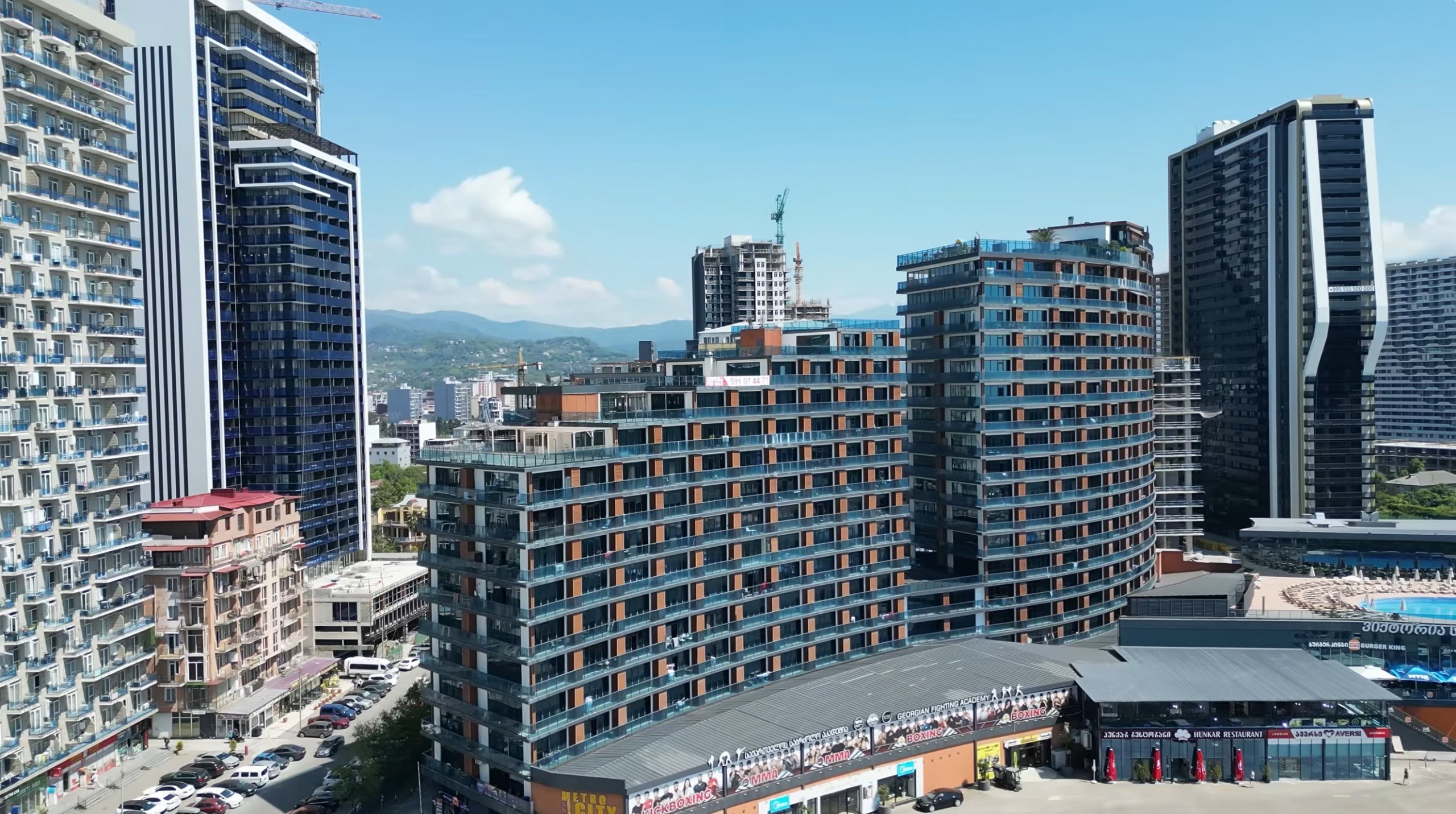
It matters where this overhang is densest. Modern construction and sales in Batumi have historically concentrated on New Boulevard: per Galt and Taggart, that location accounted for about 42% of all transactions in 2023, and 67 of the city's 155 residential projects were clustered there. It is at once the most liquid district and the most densely built: demand is there, but so is the competition for a tenant and for a buyer on resale.
Why this matters for your choice. A large construction pipeline is not a reason to stay out, it is a reason to buy deliberately. In a district with a dense overhang, your future income and liquidity depend on whether the specific property stands out: a developer with a track record, a managed-letting format, or a good position within the district. That is exactly why our work is not to sell "any studio by the sea" but to filter out the illiquid and match you with a property that will be filled and that you can resell. Before an off-plan deal, it is worth running a developer and project due diligence check.
The real entry price by district
Entry into the Batumi market remains accessible. What matters is the price per meter and the order of magnitude for entry.
Small studios start at US$40,000, the most affordable way into the city. Managed apart-hotels with amenities start at US$65,000 to US$70,000, because the unit is finished and under management. Flagship projects and premium seafront addresses start at US$110,000. For a sense of the trend: the average turnkey new-build price across Batumi reached about US$1,865 per sqm at the end of 2025, up 9.4% year on year (Galt and Taggart), following about US$1,569 in 2023 and US$1,699 in 2024.
The link is simple: the district sets the price per meter, while your budget and strategy set the floor area and the format. A 30-square-meter studio on the periphery and a view apartment on the first line are different products for different goals, and they should be chosen based on your objective, not on a handsome address.
What this means for you
For income, look at the first line and seaside locations, but count net, not gross, and seriously consider a managed or branded format: it is that, not the seaside address in itself, that delivers a yield above seasonal short-term letting.
For living, look at the inner districts: more space for your budget, calmer, and the whole urban setting nearby. If an international school for your children matters, weigh Batumi against the capital honestly, as we do in our Batumi-versus-Tbilisi comparison.
For residency, anchor on the price and valuation of a property at US$150,000, not on the district's prestige. Residency for you and your family does not depend on the address.
The core point is this: in Batumi, the winner is not "any apartment by the sea" but the right combination of a district matched to your goals, a vetted developer, and a letting format. Our work is to assemble that combination around your objective.
Ready to get specific about your goal? Get a shortlist of properties in your chosen area on WhatsApp, or take the short quiz, and we will match options to your objective: income, residency, or a home of your own.
This material is for general information only and is not investment, legal or tax advice. Figures are given as of the publication date with their source and may change. Confirm thresholds, taxes, yields, and rules at the time of the deal and consult a licensed lawyer and tax adviser in Georgia.
Ready to move from the overview to specifics?
Related reading
Frequently asked questions
Which Batumi district is the most expensive?
Old Batumi, the historic center by the sea, is at about US$3,028 per sqm for turnkey new-build at the end of 2025 (Galt and Taggart). Next come Heroes Alley at about US$2,095 and the seaside Gonio and Kvariati at about US$2,048 per sqm.
Which district is the most affordable to buy in?
The periphery, at about US$1,487 per sqm at the end of 2025 (Galt and Taggart). The inner districts away from the first line, about US$1,730 per sqm, offer a balance of price and urban setting.
Where in Batumi is best to buy for letting?
For short-term rentals, first-line and seaside locations make sense, where tourist occupancy is higher. But the yield depends heavily on management: self-managed short-term letting yields around 3% net, while a higher return is realistically achievable with a branded, operator-managed aparthotel. Always check whether the figure is gross or net revenue.
Why are prices given per square meter rather than per apartment?
Price per meter lets you compare districts, while the final cost of a unit depends on floor area, floor level, view, and construction stage. So, in one building, a studio and a large apartment cost different amounts at the same price per meter.
Where is most of the construction in Batumi?
Modern development and sales concentrate on New Boulevard: it accounted for about 42% of transactions in 2023 and 67 of the city's 155 residential projects (Galt and Taggart). It is the most liquid district but also the densest, where competition for a tenant is higher.
Does the district affect getting a residence permit?
No. The threshold is US$150,000 based on the market valuation determined by an accredited appraiser, and it is not tied to a district (it applies from 1 March 2026 and should be confirmed at the time of the deal). What counts is the value and valuation of the property, not the address.